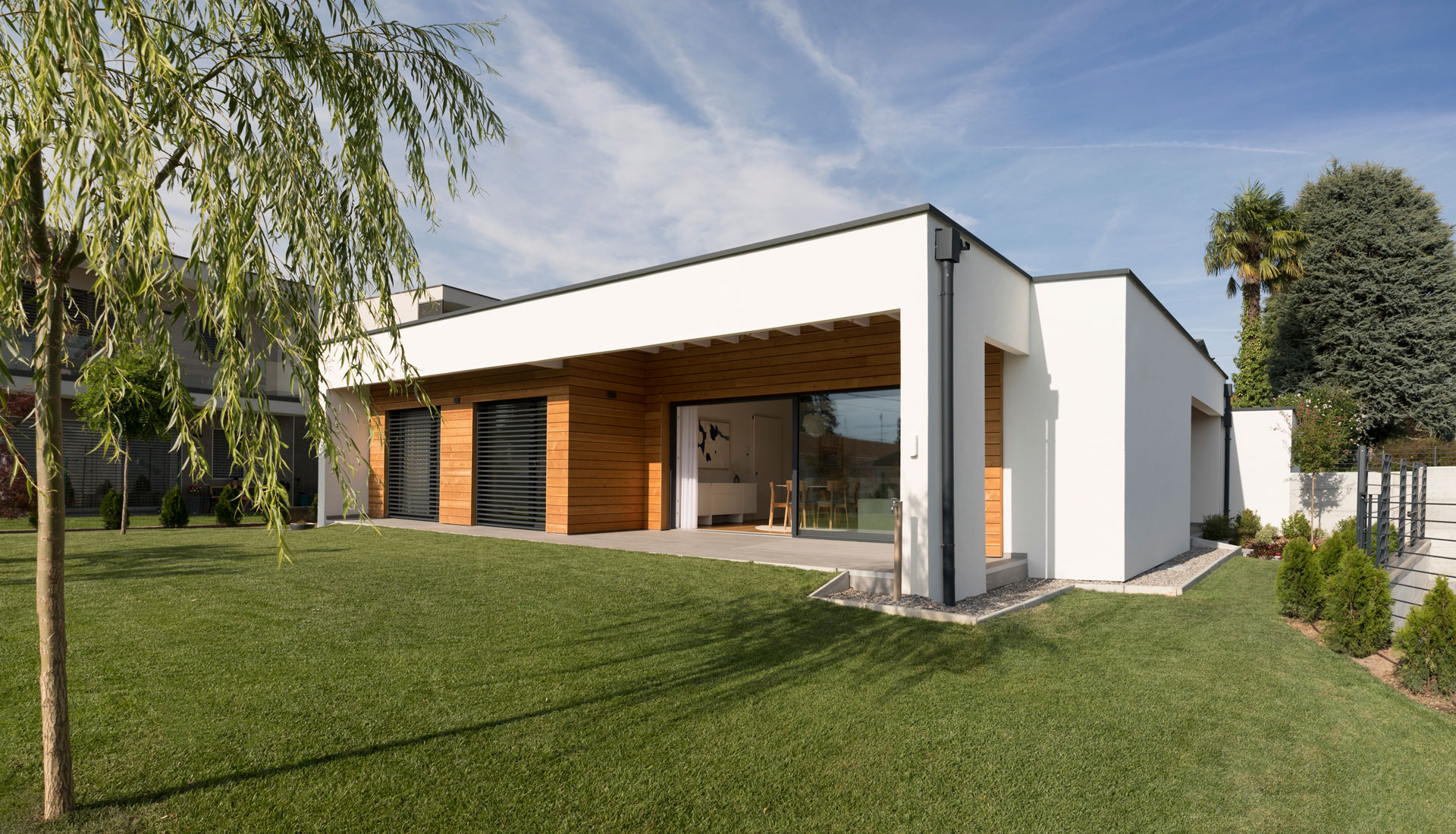
Ever been promised “turnkey” — only to end up with surprises?
When it comes to prefabricated houses, it’s a phrase you’ll hear often.
But it doesn’t always mean the same thing: from one builder to the next, included works, responsibilities, finishes and services can vary.
That’s why, before you even start comparing prices, it’s worth understanding what “turnkey” really means — and how far the offer actually goes.
In the Pozzicase process, feasibility and quote are defined in the early stages; the turnkey service then guides the client from executive design all the way to a home ready to be furnished and lived in — with a single point of contact and clearly defined costs.
Turnkey doesn’t always mean “all-inclusive”
In simple terms, a turnkey prefabricated house is a home built through a coordinated process all the way to handover, without the client having to deal separately with contractors, tradespeople and suppliers.
But there’s an important point: “turnkey” doesn’t automatically mean “all-inclusive”.
Turnkey isn’t a one-size-fits-all formula. Foundations, executive design, systems and finishes can be handled differently depending on the company. What really needs checking, then, is the scope of the offer: what’s included in the quote, who oversees each stage and which items, if any, are left out.
This is where two seemingly similar offers can turn out to be very different.
What does “turnkey” mean for Pozzicase?
For Pozzicase, the concept is a concrete one: foundations, structure, systems and finishes are all part of a single construction process.
Before the executive phase, the land, the client’s needs and the budget are analysed to assess technical and economic feasibility and define a precise offer. Depending on the starting point, the client can choose a catalog model to customise, develop a preliminary solution or bring an existing project.
Once the choices and specifications have been finalised, the turnkey service moves into its operational phase: Pozzicase oversees the executive design, builds the foundations and coordinates all works through to handover.
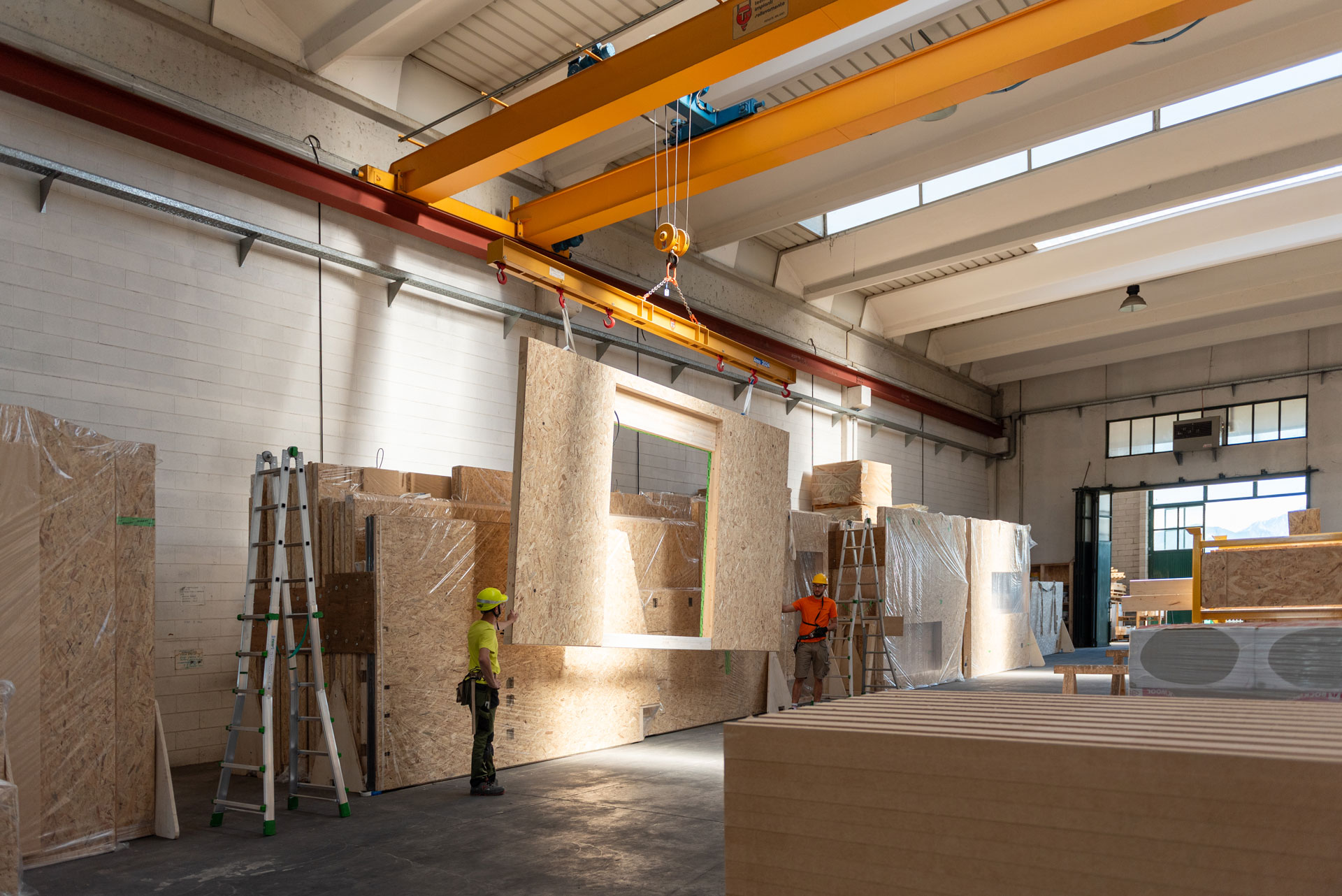
Thanks to in-house prefabrication, many building components are prepared before the construction site opens, so that the operational phase begins with works and supplies already coordinated.
Executive design → excavation and foundations → structural assembly → systems and insulation → finishes → handover
The advantage isn’t just receiving a home, but tackling a complex project through a single, organised method that’s easier to keep under control.
Can a prefabricated house really be custom-built?
Yes. The word “prefabricated” mainly describes the method by which the house is produced and built: it doesn’t necessarily mean “standard” or “the same as all the others”.
In the early stages, Pozzicase works with the client to assess the characteristics of the land, their needs, the budget and the technical and economic feasibility. From here, it’s possible to start from a catalog model to customise, develop a bespoke project or work on an already defined one.
This is the stage where the bespoke element takes shape: layout, relationship with the land, architectural style, materials, systems and finishes are all defined around the project and the people who will live in the home.
Once the preliminary choices have been made, the executive design translates them into precise instructions for production and the construction site.
In short: “prefabricated” describes the construction process; “custom-built” describes the project.
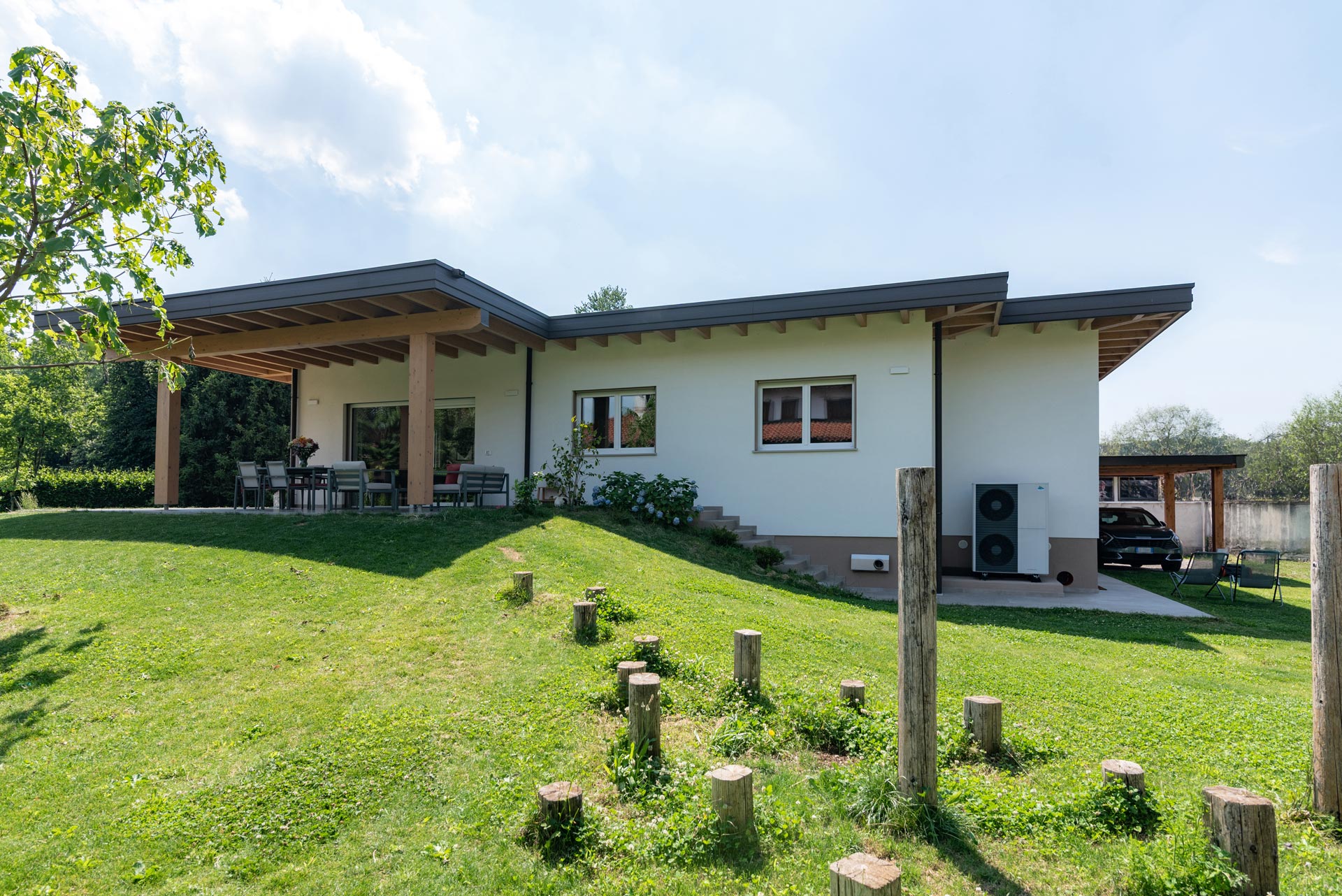
This is also shown by projects born from very specific conditions. Casa Dalia, for example, was built on an existing basement level, replacing a previous home, with the new house designed in relation to the garden, the portico and the surrounding context.
Not a model simply adapted to the plot, then, but a solution born from that place and those needs.
How much does a turnkey prefabricated house cost?
It’s one of the most frequently asked questions, but a simple price per square metre can be misleading. The cost of a turnkey prefabricated wooden house depends on floor area, the characteristics and accessibility of the land, the complexity of the work, materials, systems, finishes and the level of customisation.
Two houses of the same size can therefore have different costs. That’s why Pozzicase doesn’t use a standard price list for every home: the quote is built around the specific features of the house to be built.
The most useful question isn’t just “How much does it cost per square metre?”, but “What’s included in that price?”. That’s what makes two quotes truly comparable.
Pozzicase draws up a precise, detailed quote with a full bill of quantities, setting out the solutions planned for the specific project, including insulation, systems and finishing materials. Defining these choices before construction begins helps build a clearer financial picture; any changes requested later may, of course, affect the cost.
How long does it take to build a prefabricated house?
One of the main advantages of timber prefabrication is the ability to shorten construction times compared with a traditional building system, because a significant part of the work is prepared and organised before anything reaches the site.
The foundations can also benefit from the lighter weight of a timber structure compared with a masonry building: the loads transferred to the ground are lower and, where conditions allow, this can translate into leaner solutions and shorter execution times.
Structural elements are pre-cut at the plant using CNC machinery, labelled and then transported to the site, where they are mechanically assembled with precision. This reduces the amount of work carried out on site and makes assembly faster and more controlled.
The following stages are planned through a coordinated timeline, designed to avoid overlaps between the different trades. Pozzicase’s technicians monitor the works right through to finishes, underground utilities and external works, ensuring continuity across all the professionals involved.
The result is a more efficient method, one that combines shorter timescales, precise execution and quality control.
What should you check before choosing a turnkey offer?
Before comparing two quotes, check at least these points:
- Are the foundations included?
- How are the executive design and any preliminary stages handled?
- What kind of systems and finishes are included?
- Which requests could lead to a change in price?
- Who will actually coordinate the different stages?
The value of a turnkey home isn’t measured only by the figure at the bottom of the quote, but by how truly that quote reflects the house that will actually be built.
Custom-built and turnkey: the value lies in the method
For Pozzicase, the value lies in the continuity between what is defined in the early stages and what takes shape on site: a single point of contact, coordinated works and a quote built around the real features of the home.
Curious about our quotes?
Request information in the Contacts section and tell us about your project.

